

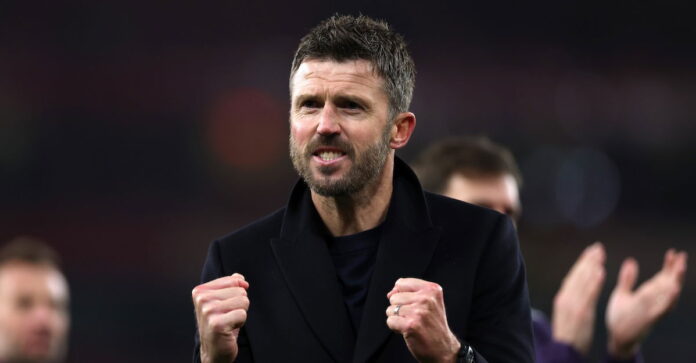

Manchester United return to Old Trafford on Sunday afternoon for a Premier League meeting with Fulham, with Michael Carrick looking to make it three wins in a row. Even at home, this is the sort of fixture that presents a difficult challenge and can easily turn into an awkward affair. The Red Devils, therefore, simply cannot afford to get stretched, rush the ball, or lose patience early on in the game. Marco Silva’s side are well-drilled, brave in possession, and make the teams they face defend wide areas for long spells before they attack the half-spaces. Carrick‘s task, therefore, is to instruct United to remain in a compact mid-block in order to limit Fulham’s patterns of play. The team also needs to be aggressive to force turnovers in dangerous areas of the pitch. Silva’s approach Fulham will test United’s mettle by recycling possession through Joachim Andersen in the first phase of build-up, which will pull the opposition midfielders out of shape. Sander Berge will then look for moments in the second phase to play into the channels once the opponent’s back line starts to shuffle. Silva’s side also create overloads out wide with Antonee Robinson. These quick combinations release Alex Iwobi for a cross into the corridor of uncertainty. Emile Smith Rowe then arrives late to create a numerical advantage in the final third. This is exactly the situation that occurred in the reverse fixture at Craven Cottage in August 2025. Smith Rowe grabbed Fulham a deserved point in such circumstances after United took the lead through a Rodrigo Muniz own goal. If United press too high or drop too deep, Fulham will play right through their midfield. All it takes is one cut-back from Harry Wilson to find Raul Jimenez free in the box. Carrick’s tactics United need to be patient with their build-up play as Fulham will aim to cut out any possible passing lanes. Lisandro Martinez, therefore, will be crucial in unlocking their defence. The 28-year-old must gauge when to make a routine sideways pass or a risky vertical pass. This will depend on the opposition’s shape and how narrow or wide the gaps are. It sounds simple, but the Argentina international’s propensity for line-breaking passes will be pivotal to any potential chance United have of being triumphant. Bruno Fernandes‘ ability to receive between the lines from Martinez and link up with the likes of Amad and Bryan Mbeumo will be key in order to destabilise Calvin Bassey and Issa Diop. In the last phase, Luke Shaw should make underlapping runs to create a numerical superiority if his legs allow it. This will enable him to combine effectively with Matheus Cunha or Mason Mount. Conclusion – Key Takeaways The biggest defensive test will be how well Harry Maguire deals with cut-backs in the 18-yard box. These situations are where opponents often score at Old Trafford. From an attacking standpoint, United can exploit Fulham when they fast break in transition after regaining possession through Casemiro and Kobbie Mainoo. Set pieces matter, too. Games like this often swing on one dead-ball delivery, one flick-on, or one lapse in concentration from Diogo Dalot. If United stay tight, choose their pressing triggers carefully, and move the ball quickly once they win it, Carrick’s side should beat Fulham comfortably to make three wins in three, using a different approach in each match – something Ruben Amorim would never have trialled. Featured image Justin Setterfield via Getty Images The Peoples Person has been one of the world’s leading Man United news sites for over a decade. Follow us on Bluesky: @peoplesperson.bsky.social Okari Wambunya Okari Wambunya is a football writer at The Peoples Person, covering Manchester United with fast, source-led updates on team news, transfers, and matchday reaction. A former teacher, he now coaches grassroots football and continues to support young people through academic mentoring and youth work. He holds a BA (Hons) in English from Brunel University London and an MA in Education from King’s College London, with experience across digital journalism and broadcast sports media. Okari first praised Michael Carrick in a blog post he wrote at 16 years old in 2014; over a decade later, Man United appointing Carrick as interim head coach feels like a full-circle moment.






© 2025 Manchester United North America. All Rights Reserved. Desigb by CODEUS.