

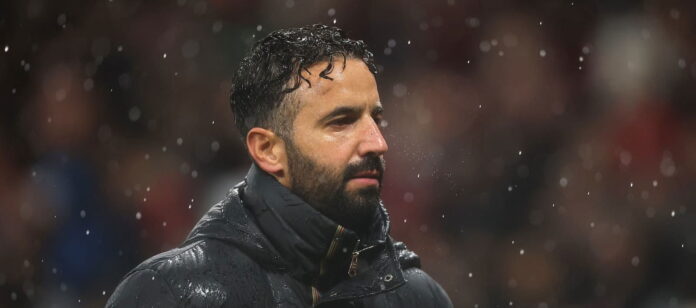

Former Manchester United defender Gary Pallister has shared his thoughts on why Ruben Amorim’s time at Old Trafford came to an abrupt end, pointing to tactical stubbornness, defensive instability, and a lack of consistency as key factors. Pallister, speaking in association with Spreadex Sports, suggested that frustration had been building both among supporters and within the club hierarchy long before the final decision was taken. Tactical confusion and a turning point According to Pallister, the turning point came after Manchester United’s narrow 1–0 win over Newcastle United, a match in which the team kept a clean sheet playing with a back four. “We win 1–0, keep a clean sheet with a back four, and then the following match he goes to a back five against Wolves — the worst team on paper in the Premier League. It left a lot of people scratching their heads,” he said. Pallister believes that decision raised serious concerns internally, including among football director Jason Wilcox and senior figures at the club. A disappointing result against Wolverhampton Wanderers only intensified the scrutiny, leading to a reported meeting between Amorim and Wilcox shortly afterwards. “It didn’t take a rocket scientist to realise there were issues going on behind the scenes,” Pallister said. “After that, he lost his job.” Results and rigidity While Pallister admitted that not everything was down to tactics alone, he noted that Manchester United had stagnated in the league table and Amorim’s win percentage was ultimately not strong enough to protect him. He was particularly critical of the manager’s commitment to a back five, highlighting how rarely the system has delivered sustained success in English football. “Historically, a back five doesn’t tend to work,” he said. “I think Chelsea under Conte are the only team to win the Premier League playing it. He [Amorim] was probably too stubborn in the end.” Pallister added that when Amorim finally appeared ready to adapt, the damage had already been done. Defensive instability and constant changes As a former centre-back, Pallister was especially concerned by the lack of continuity in Manchester United’s defence. Injuries to key players such as Matthijs de Ligt, Harry Maguire and Lisandro Martínez did not help, but he felt Amorim’s rotation policy only made matters worse. “Your back four is so important. You get 60 or 70 minutes together and you start to tune into each other — then someone gets changed every game. I could never understand that unless a player is injured or having a shocker.” He likened the situation to his own playing days alongside Steve Bruce, Denis Irwin, Paul Parker, and Gary Neville, where familiarity and trust were central to defensive solidity. The first part of our exclusive interview with Pallister, where he talks about Michael Carrick’s appointment, can be found here. Featured image Jan Kruger via Getty Images The Peoples Person has been one of the world’s leading Man United news sites for over a decade. Follow us on Bluesky: @peoplesperson.bsky.social Red Billy Red Billy is the managing editor of The Peoples Person, author of three books and two magazines and totally obsessed with football’s transfer market. Billy first saw United live in 1971, watching George Best, Bobby Charlton and Denis Law, before becoming a League Match ticket book holder from 1975/76 and a writer since 1995. Billy still insists Matteo Darmian and Alex Telles could have made it at United given half a chance.





© 2025 Manchester United North America. All Rights Reserved. Desigb by CODEUS.